The Importance of Play
By Fiona Jongsma
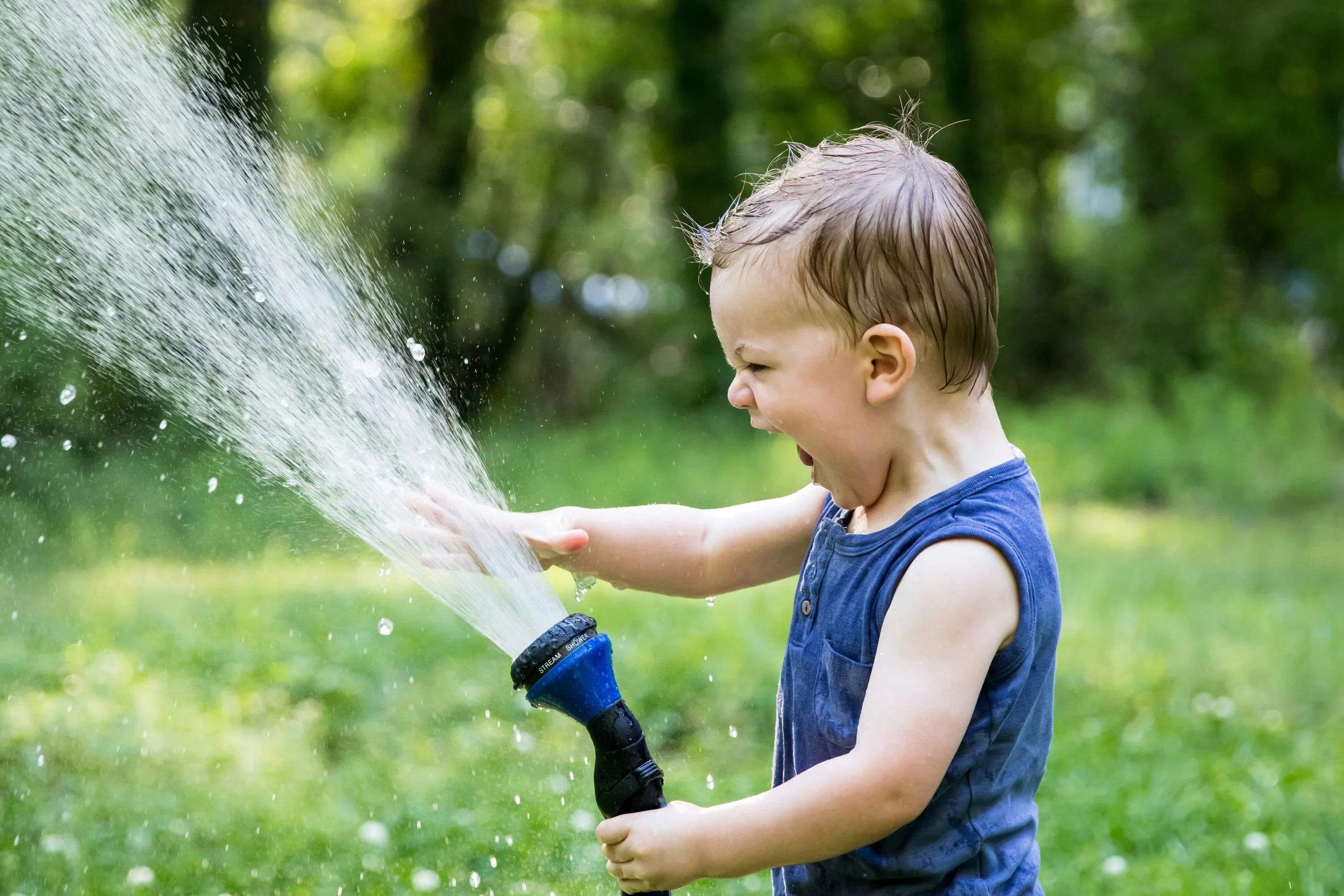
Driving down the street this week, a sweet sight cast my mind back to childhood: two children on their front lawn leaping around a sprinkler, soaked to the skin after a hot day. Can you remember such simple pleasures? We often take the freedom to simply play for granted. It wasn’t until I was trained to think like an occupational therapist that I realised the wonder of what happens through play.
It still surprises me when the pre-teens I work alongside (who academically outperform me in maths!) go crazy for a game of hide-and-seek, often pleading for us to play. My office doesn’t offer many creative hiding places, so sometimes they’re constrained to squeezing into a small clinic room. Luckily, there’s always the classic “behind the door” option.
These cheap thrills reveal how much children value activities of little utilitarian value—or even obvious sense. In this way, they can be so unlike us adults.
One of the gems I’ve learnt from my boss, Steph, is to prescribe play to parents as home therapy. Ten to fifteen minutes of playing with their child each day helps develop a secure attachment over time. When a secure attachment is present, a child is more likely to respond positively to boundaries, such as bedtime or transitioning from play to the dinner table. The trust built through ten minutes of shared play can make a difference to the other 23 hours and 50 minutes of the day.
But how do we do this? For many adults, play has long been left on the scrap heap. Life is either full of productive activity or, at the other end of the spectrum, escapism—often through the shiny black item in our hand. Our days are diarised with a thousand appointments. To feel the freedom and disinhibition necessary to play can seem impossible, like something we need to conjure up from a deeply forgotten place within us.
One of the things I love about God is that he tells us to rest. He essentially says, “I’ve got this.” At one point in history, his people had to follow strict rules—not even picking up a hair comb or a farm tool, among many other stipulations—to ensure they truly stopped and rested, celebrating him for at least one day a week. Imagine if someone woke us up on Saturday morning and forced us to rest, watching over us all day to make sure we really didn’t do any work! Honestly, I think that might be the only thing that would get me to truly rest. Play becomes more doable when we are forced to stop the productivity train. God gives us permission to do this—he even leads us there (Psalm 23)!
Perhaps another thing that hinders us is that play can feel embarrassing. In the Bible, King David, in an act of self-abandonment, “danced before the Lord with all his might” (2 Samuel 6:14). He had such joy that he danced like nobody was watching—yet everyone was. Imagine our head of state, King Charles, doing that! Play can feel strange; others might stare. But have you noticed that the more animated and sillier an adult is during play, the more excited and engaged a child becomes?
God created play. It’s not the first thing we tend to think about when we think of God, but it’s worth pondering. He thinks play is a good thing. We see a magnificent example of this on the east and west coasts of Australia in particular seasons: whales at play. The Bible tells us that God “made them to play in the sea” (Psalm 104:26). The way animals play is even likened to what it will be like to enter eternal life: “You will go free, leaping with joy like calves let out to pasture” (Malachi 4:2).
Play can feel so hard to tap into amidst the daily grind and the gnawing grief of disability. But rest assured: play is part of your future as one of God’s children. It will come naturally as we feel the freedom of his welcome and enter the rest he has prepared for us.
Reflection
Play can feel like a very abstract concept in cultures where success and achievement are paramount. It can be difficult for parents who did not play with their caregivers in their own childhoods to facilitate it as a parent. If that’s you, you might like a few ideas, and so I have started a list below. Maybe you can turn this into a running list on your device? I know Ms Rachel is good, but you’re even better!
Tip or chase
Water fights (think water spray bottles, water bombs, water pistols, running in the sprinkler)
Red light, green light
What’s the time Mr Wolf?
Stuck in the Mud
Throw a sheet over the dining table and make a cubby
Put the lounge cushions on the floor and have some rough play
Pick flowers from the local area and make a picture on the driveway or write out your name in flowers
Skip rocks in water
Beach play - Bury your body in the sand and make a mermaid’s tail. Or for the sensory defensive, make animal shapes on the sand.
Make mud cakes
Musical statues with your favourite pop music playing
Sleeping lions
Dress ups
Make a city with cardboard boxes
Go to the local park - you could bring something along like a ball, a stomp rocket, a foam plane to fly, a kite, etc.
Jump on the trampoline together
Bike riding
Sport - shooting hoops at a basketball court, kicking a soccer ball
Going swimming
Pretend play - play “cooking,” being doctors, driving trains, etc.
“The floor is lava” game
Build a fort in the lounge room with pillows or using a sheet over the kitchen table
Some play ideas if your child is less physically mobile:
Construction activities: e.g. Magnatiles, Duplo and Lego
Playdough or clay: rolling, shaping, using tools, or collaborative sculpture
Sensory bins: rice, beans, sand, water beads, leaves, or themed bins (farm, beach, space)
Music play: shakers, bells, drums, switch-activated instruments, or choosing songs for others to act out
Story creation: making up stories together using picture cards or toys
Puzzles: wooden, tactile, or large-piece puzzles
Cause-and-effect toys: pop-up toys, switch toys, marble runs
Reading together (interactive, silly voices, choosing the book)
Chatting and storytelling about favourite things or memories
Board and card games (adapted as needed): large pieces, card holders, or digital versions.
Make a shoe box diorama
Fiona Jongsma is a Chaplain and Occupational Therapist at Olive Tree Therapy. She has a Masters of Divinity from Sydney Missionary and Bible College. She hopes to keep investing in ‘spiritual children’ throughout life and is also a proud aunty.
The views and opinions expressed on this site are those of the authors and do not necessarily reflect the official position of The 139 Collective. As a collective, we seek to humbly learn from each other’s experiences and remember the unity that we share in Christ even when our current viewpoints on the difficult topic of disability differ.